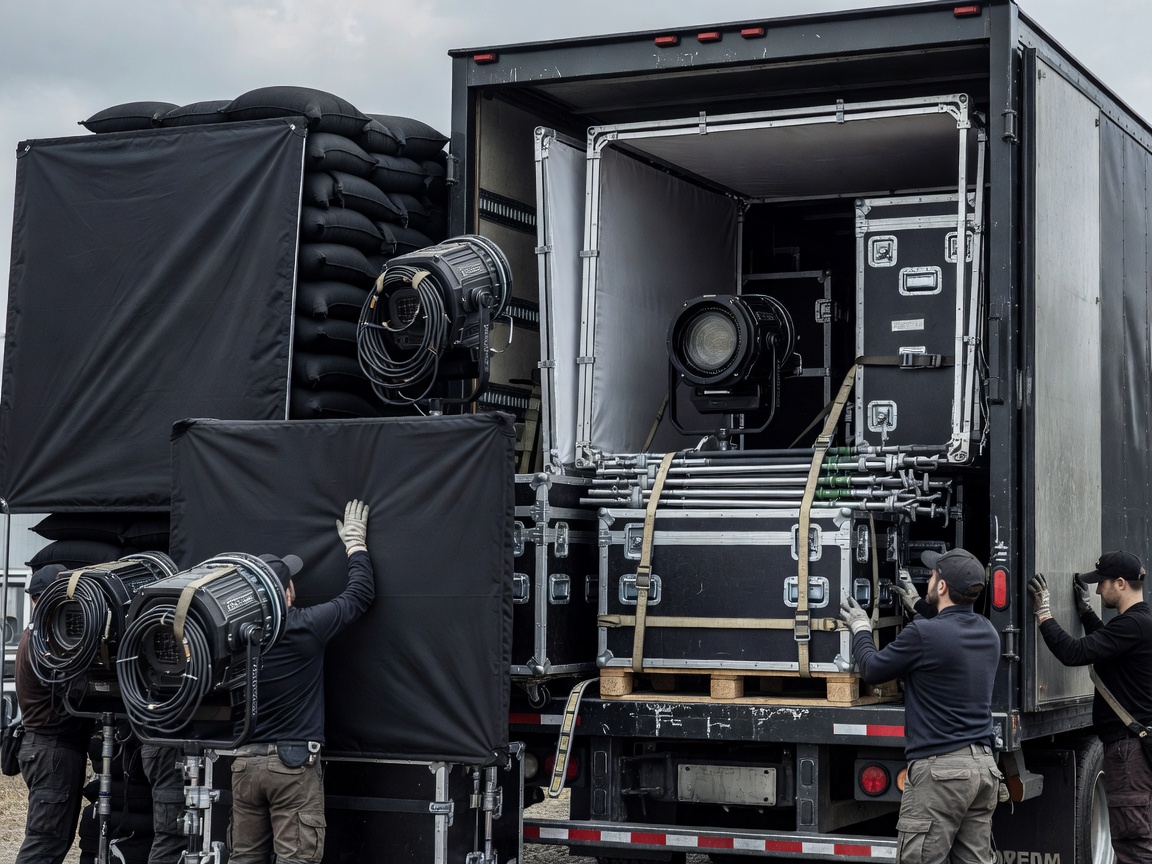
Moving the Tools of the Trade
The logistical heartbeat of any production is the movement of its equipment. From delicate lenses in the camera truck to the immense weight of stands and sandbags in the grip truck, every department requires a specialized approach to transport. Equipment transport is never just about hauling cargo; it is about preserving order, ensuring security, and guaranteeing that when the doors open at the location, the gear is exactly where it needs to be.
Departmental Logistics
Different departments present distinct transport challenges:
- Cameras and Lenses: This is the highest value, most fragile cargo on set. Transport requires vehicles with exceptionally smooth suspension and secure, climate-stable environments. Tie-down points must be ubiquitous to secure specialized carts.
- Lighting and Grip Equipment: Heavy, bulky, and prone to shifting. Trucks handling this gear must feature robust tail lifts, heavy-duty floorings, and lateral load bars to prevent cart movement during transit.
- Props and Wardrobe: Voluminous and awkwardly shaped. Wardrobe trucks often require built-in racking for hanging garments, while props transport demands flexible cargo space capable of securing delicate, irreplaceable set dressing alongside standard production supplies.
Loading Procedures and Sequencing
A poorly loaded truck will cost a production hours of setup time. We advocate for strict LIFO (Last In, First Out) loading procedures. The equipment required immediately upon arrival—such as work lights, generators, and initial layout boards—must be the last items loaded at the end of the previous day.
Delivery sequencing is equally critical. The lighting and grip departments generally need to arrive and begin their rough-in before the camera department arrives on set. Transport planning must reflect these staggered call times, preventing a bottleneck of trucks attempting to access a single loading zone simultaneously.
Secure Transport and Return Logistics
Film equipment is a high-theft target. Secure transport involves route planning to avoid high-risk stopping areas, utilizing vehicles with upgraded deadlocks, and maintaining strict protocols regarding who holds the keys to the cargo area. Moreover, the secure organization of equipment prevents transit damage, which can be just as costly as theft.
Finally, return logistics—often called the "wrap out"—are historically chaotic. After a long shoot, the temptation is to throw gear into the trucks randomly. Proper transport coordination insists on disciplined loading procedures even at wrap, ensuring that the next day's shoot (or the final return to the rental house) isn't compromised by exhaustion-driven disorganization.