Mastering the Geography of Film
The perfect filming location is rarely the most accessible one. Directors consistently fall in love with remote cliff sides, narrow historical streets, and dense woodlands. The role of location vehicle support is to bridge the gap between the creative vision and physical reality. We analyze road networks, bridge weight limits, and terrain to plan how the necessary infrastructure will actually reach the set.
Difficult Access and Remote Locations
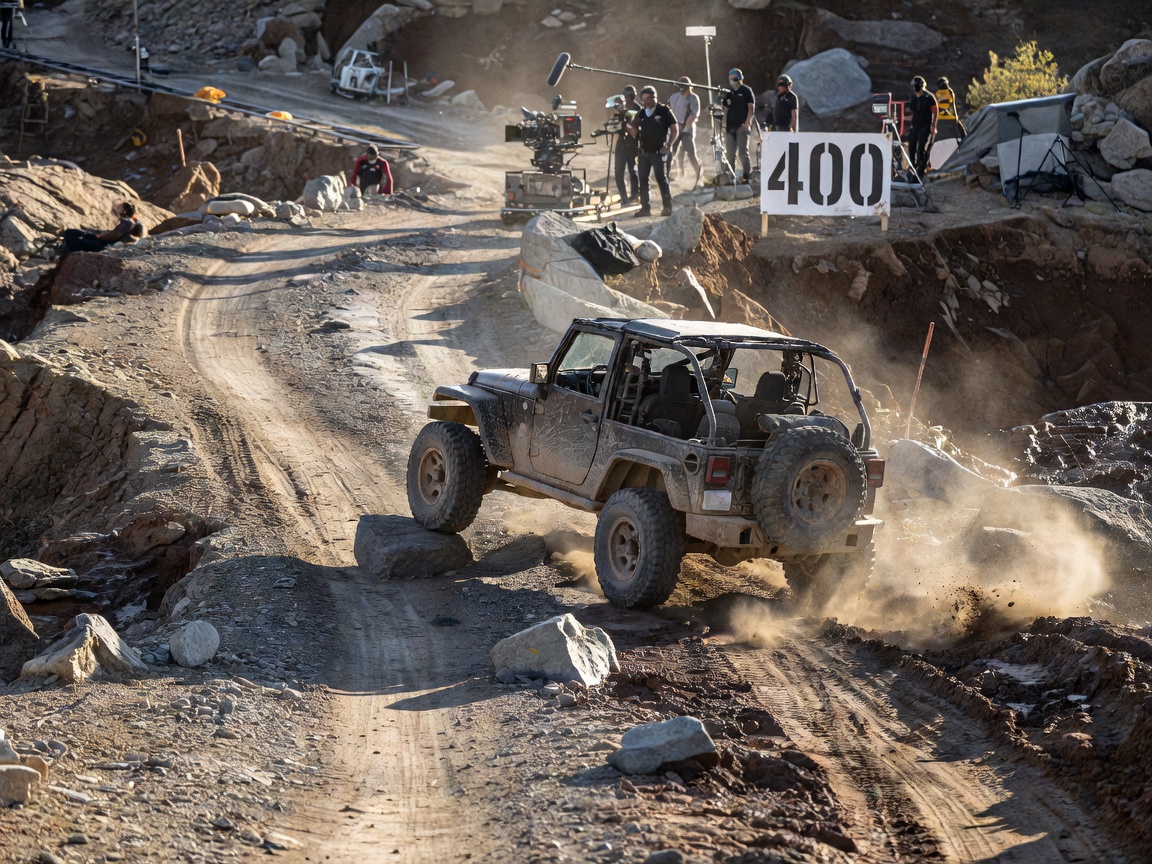
When dealing with remote locations, standard transport vehicles often fail. A heavy lighting truck will sink in a muddy field, and a long-wheelbase transport simply cannot negotiate tight switchbacks. Support planning involves mapping the route meticulously, occasionally transferring gear from heavy road trucks into specialized 4x4 utility vehicles at a secure halfway point.
Weather considerations are paramount. A dirt track that is perfectly passable during a dry tech scout can become a treacherous mud trap after an overnight downpour. Contingency planning for traction, towing support, and trackway installation is an essential part of location vehicle management.
Temporary Staging and Loading Zones
Urban shoots present entirely different challenges. You cannot simply park ten technical trucks in the middle of a busy city street. Location restrictions dictate where vehicles can stop, for how long, and whether they can leave their engines running. We assist productions in designing temporary staging areas—often located a few streets away from the hot set—where vehicles can wait until they are called in.
Managing the loading zones near the set requires military precision. Vehicles must arrive, offload their equipment to the respective departments, and immediately vacate the zone to allow the next truck in. This site coordination prevents traffic jams that attract noise complaints and local authority intervention.
Vehicle Positioning and Site Coordination
Once on site, the exact positioning of every vehicle matters. The generator truck must be close enough for cable runs but far enough away that engine noise doesn't ruin the sound take. Catering needs level ground, while the camera truck needs direct, unobstructed access to the shooting area. Proper location vehicle support translates a two-dimensional site map into a functional, three-dimensional working environment that supports the rhythm of the shoot.