The Pulse of the Production
All the pre-production planning in the world means nothing if the day-to-day execution falls apart. On-set vehicle coordination is the active, real-time management of transport assets while cameras are rolling. It involves translating the Assistant Director’s call sheet into a functional choreography of vans, trucks, and picture vehicles.
Vehicle Scheduling and Driver Communication
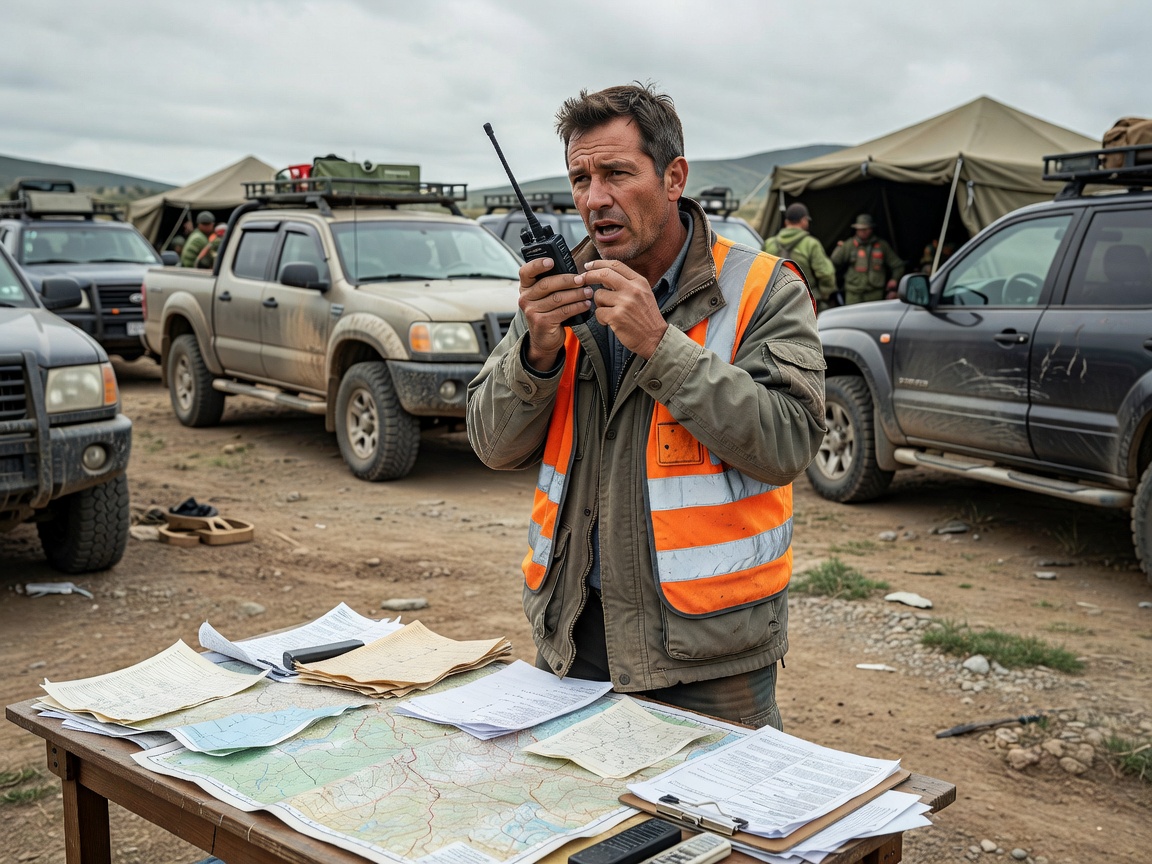
A production-day plan is highly volatile. An actor taking longer in makeup delays a shuttle; a complex stunt setup delays an equipment move. Dedicated coordination relies on continuous driver communication. We establish clear radio channels and communication hierarchies to ensure drivers receive instructions quietly and promptly, without creating excess chatter on the main production channels.
Vehicle movement near a hot set must be heavily regulated. Reversing alarms can ruin audio takes, and exhaust fumes can disrupt lighting atmospheric effects. Coordinators ensure that equipment handovers and vehicle repositioning only occur during designated breaks or turnaround times.
Managing Location Changes
The "company move"—transferring the entire production from one location to another during the shooting day—is a logistical crucible. It requires massive staging coordination. Trucks must be packed swiftly, dispatched in a specific order, and received at the new location by an advance team. A successful company move hinges on a solid contingency plan; if the primary route is blocked by unexpected traffic, alternate routes must be pre-mapped and instantly communicated to the entire fleet.
Wrap Procedures
The end of the day is when mistakes happen. Crews are exhausted, light is failing, and the rush to leave is palpable. On-set coordinators impose order on the wrap procedure. They manage vehicle staging so trucks can be loaded logically, ensure drivers are ready and rested for passenger return trips, and confirm that no gear—or personnel—is left behind on location.